Should Salon Chains Consider Dual-Service Shampoo and Foot Spa Beds?
As salons expand beyond traditional hair services, equipment manufacturers are introducing increasingly multifunctional products.
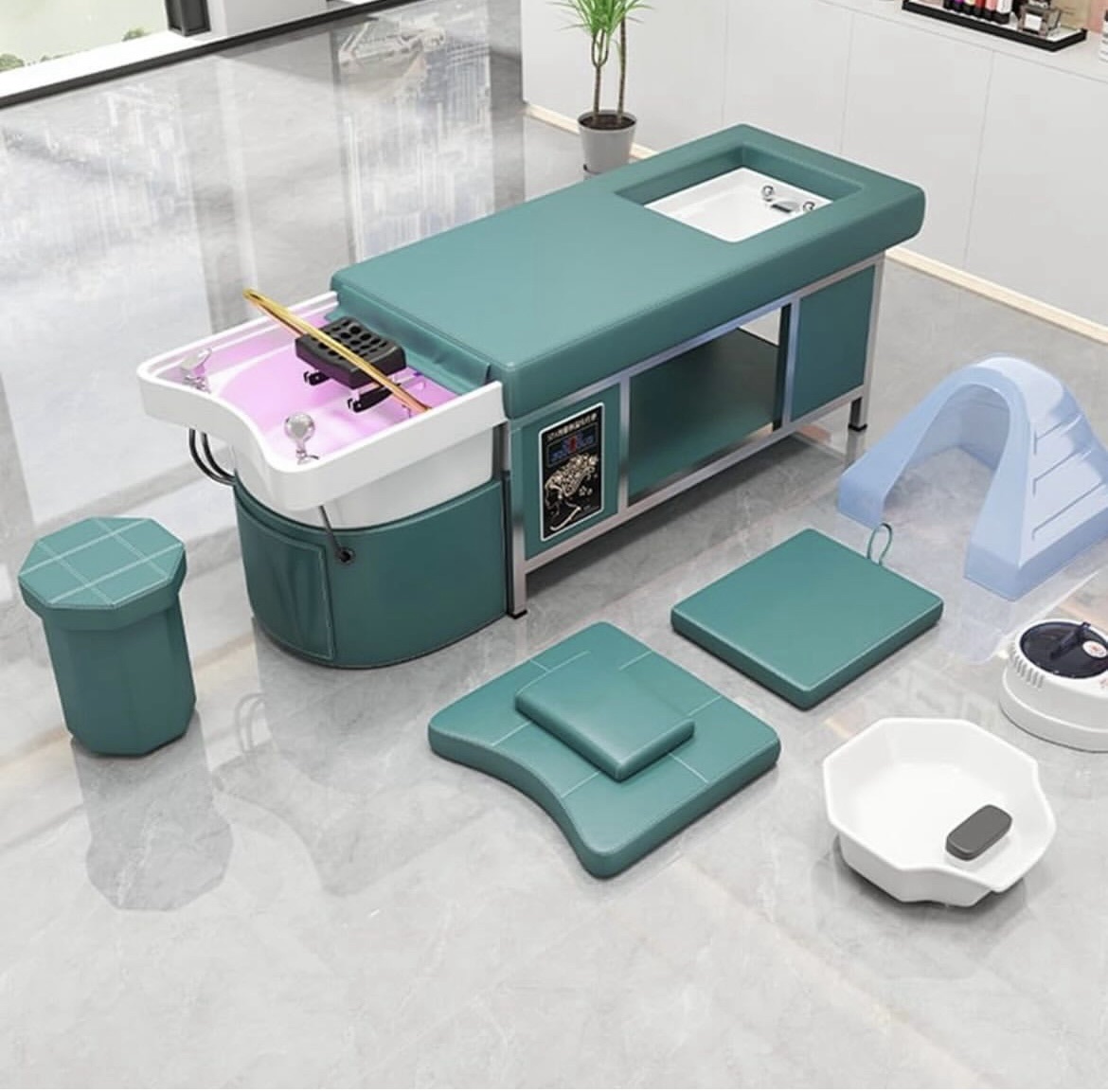
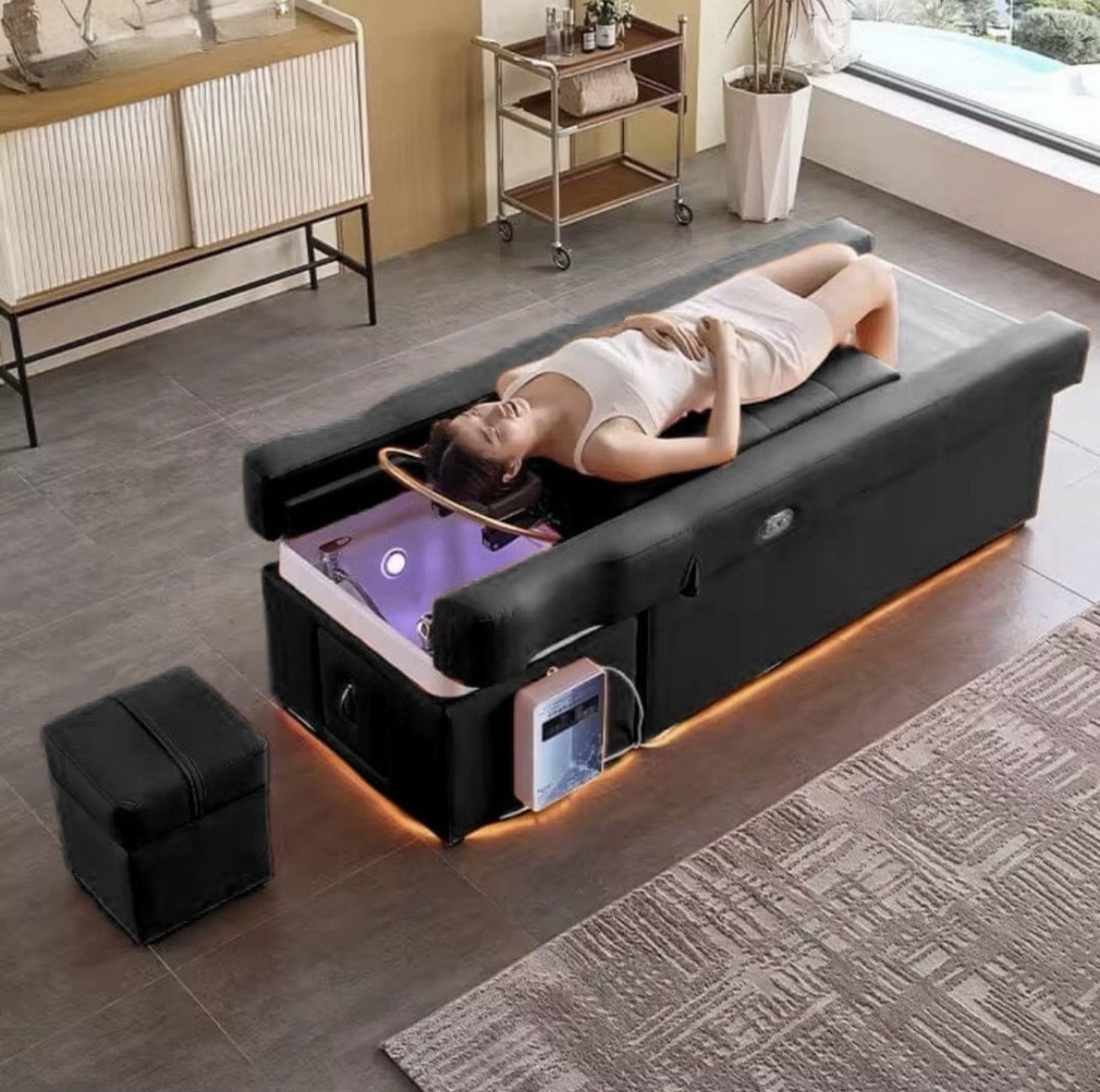
One example is the dual-service shampoo and foot spa bed: a reclining salon bed equipped with one basin for hair or scalp services and a separate basin for foot washing or foot-spa treatments.
The concept is attractive.
A client can receive a head-spa treatment and a foot-care service at the same time, while the salon creates a more immersive relaxation experience without installing two completely separate treatment stations.
For an independent salon, this may simply be an interesting premium service.
For a salon chain, however, the decision requires a broader evaluation.
Management should consider:
- Whether the service fits the brand concept.
- Whether customers will pay for the combined experience.
- Whether two employees are required.
- Whether the equipment can be cleaned efficiently.
- Whether each branch can follow the same operating procedure.
- Whether spare parts and technical support will remain available.
- Whether the investment can be scaled across multiple locations.
A visually impressive piece of salon equipment is not automatically a commercially practical one.
The real question is:
Can a dual-service shampoo and foot spa bed improve customer experience and revenue without creating unnecessary operational complexity?
1. What Is a Dual-Service Shampoo and Foot Spa Bed?
A dual-service shampoo and foot spa bed combines two separate service areas within one integrated unit.
The head section normally includes:
- A shampoo or head-spa basin.
- A faucet or flexible sprayer.
- A drainage system.
- Neck support.
- Space for hair, scalp or head-spa treatments.
The foot section normally includes:
- A separate foot-washing or foot-spa basin.
- Water inlet and drainage functions.
- Leg and foot positioning space.
- Access for the service provider.
- Cleaning and maintenance components.
Depending on the model, the bed may also include:
- Electric reclining adjustments.
- Heating functions.
- Massage functions.
- LED lighting.
- Water circulation.
- Temperature controls.
- Storage compartments.
- Removable accessories.
Unlike using one basin for different services at different times, this type of equipment contains two separate basins designed for two service areas.
That distinction is important when evaluating hygiene procedures, staffing and customer experience.
2. Why This Equipment Is Attractive to Salon Chains
Salon chains are constantly looking for ways to create distinctive services that can be repeated across multiple locations.
A dual-service bed may support several commercial objectives.
A More Memorable Customer Experience
Receiving a head-spa treatment and a foot-spa service simultaneously can feel more immersive than receiving either service separately.
The equipment itself also has strong visual appeal, which may help salons create:
- Social-media content.
- Premium service packages.
- New-customer promotions.
- VIP treatment experiences.
- Distinctive flagship-store concepts.
For brands competing in crowded urban markets, a recognizable service experience can be more valuable than simply adding another standard chair or treatment bed.
Potential for Higher Service Value
A combined treatment may support a higher selling price than a standard shampoo or scalp service.
The salon may package it as:
- A head-and-foot relaxation ritual.
- A premium wellness package.
- A scalp-care and foot-soak combination.
- A membership upgrade.
- A bridal or special-event service.
However, a higher selling price does not automatically mean higher profit.
Salon chains must also calculate staffing time, cleaning time, water usage, room occupancy and equipment depreciation.
More Services Within One Treatment Area
Where space is limited, combining two service functions within one bed may reduce the need for separate treatment furniture.
This can be useful for:
- Compact urban branches.
- Private treatment rooms.
- Premium suites.
- Head-spa-focused concepts.
- Flagship locations testing new services.
The true space saving depends on the equipment dimensions, employee working area and plumbing layout.
A large multifunctional bed may still require more clearance than expected, especially when two employees need to work around it simultaneously.
3. Is the Equipment Suitable for Every Salon Format?
Not every salon chain will benefit from the same equipment configuration.
A dual-service bed may be a good fit for:
- Head-spa chains.
- Premium beauty salons.
- Wellness-focused salon concepts.
- Luxury hair salons.
- Private treatment suites.
- Businesses selling longer relaxation experiences.
It may be less suitable for:
- High-volume, fast-turnover salons.
- Budget salon chains.
- Locations with limited plumbing capacity.
- Businesses where customers rarely book foot services.
- Salons without enough staff to provide simultaneous treatments.
- Branches that rely heavily on quick chair turnover.
The equipment should fit the salon’s operating model, not simply its visual style.
4. Simultaneous Service Requires a Clear Staffing Model
One of the first questions salon chains should ask is whether the head and foot services will be performed by one employee or two.
Two-Employee Service
Using two employees may create a more seamless simultaneous experience.
However, it also increases labour cost and requires:
- Coordinated appointment scheduling.
- Clear division of responsibilities.
- Consistent service timing.
- Enough space for both employees.
- Training across different service categories.
A premium service may justify two employees, but the selling price must support the additional labour.
One-Employee Service
One employee may alternate between the head and foot sections.
This reduces labour requirements but may weaken the “simultaneous” experience.
It can also create workflow problems if:
- One treatment requires constant attention.
- The employee must repeatedly move around the bed.
- Products or tools are stored in different locations.
- The service sequence is difficult to standardize.
Before purchasing equipment, salon chains should test the complete treatment workflow rather than evaluating the bed only from photographs or demonstration videos.
5. Hygiene Still Requires Separate Procedures for Both Basins
The head basin and foot basin are separate, but both still require clear cleaning and maintenance procedures.
The foot basin may be exposed to:
- Skin residue.
- Lotions or oils.
- Foot-care products.
- Water deposits.
- Disposable liner residue.
The shampoo basin may be exposed to:
- Hair.
- Shampoo and conditioner.
- Scalp-treatment products.
- Hair colour or treatment residue.
- Oils and masks.
Salon chains should confirm whether the two systems have:
- Separate drainage pathways.
- Separate hoses and fittings.
- Removable drain components.
- Accessible surfaces for cleaning.
- Compatible cleaning requirements.
Management should establish separate cleaning checklists for the head and foot areas, even when both are integrated into the same bed.
Local sanitation and licensing requirements should also be reviewed before the service is introduced.
6. Customer Comfort and Ergonomics Must Be Tested
A product can look luxurious in photographs but still create comfort problems during a long service.
Salon chains should evaluate:
- Neck support.
- Head position.
- Back and waist support.
- Leg angle.
- Foot access.
- Bed width.
- Bed height.
- Ease of entry and exit.
- Comfort during extended treatments.
The needs of the customer are only one part of the evaluation.
Employee ergonomics also matter.
Staff should be able to reach:
- The client’s scalp.
- The faucet and sprayer.
- The foot basin.
- Product trays.
- Control panels.
- Drain and cleaning areas.
Poor working height or difficult access can increase fatigue and make the treatment harder to perform consistently.
7. Plumbing and Installation Should Be Reviewed Early
A multifunctional bed may require more complex installation than a standard shampoo unit.
Before confirming an order, buyers should verify:
- Water inlet requirements.
- Hot- and cold-water connections.
- Drainage requirements.
- Electrical voltage and plug standards.
- Power consumption.
- Water heating functions.
- Floor drainage requirements.
- Installation clearances.
- Access for future maintenance.
Some units may use direct plumbing, while others may rely partly on water tanks, pumps or external heating systems.
Salon chains should not assume that every branch can install the same model without reviewing the site conditions.
A product suitable for a newly constructed flagship store may be difficult to install in an older leased location.
8. Maintenance Complexity Can Affect Long-Term Cost
A dual-service bed contains more components than a basic salon bed or shampoo station.
Possible service components may include:
- Water pumps.
- Heating systems.
- Drain valves.
- Flexible hoses.
- Electric actuators.
- Control panels.
- LED systems.
- Massage motors.
- Water circulation components.
More functions can improve the customer experience, but they can also create more maintenance points.
Professional buyers should ask:
- Which components are most likely to require replacement?
- Can parts be replaced individually?
- Are wiring and plumbing diagrams available?
- Can the supplier provide troubleshooting guidance?
- Are spare parts available for future orders?
- Can a local technician service the equipment?
- How long will the model remain in production?
For salon chains, spare-parts planning should be considered before the first shipment, not after a unit stops working.
9. Product Consistency Matters for Multi-Location Rollouts
A salon chain may initially test one or two units before expanding the concept to additional branches.
The supplier should therefore be able to maintain consistency in:
- Overall dimensions.
- Upholstery colour.
- Surface finishes.
- Control functions.
- Electrical components.
- Plumbing connections.
- Accessories.
- Packaging.
Unexpected changes can create problems for:
- Interior design standards.
- Installation teams.
- Employee training.
- Spare-parts inventory.
- Customer experience.
Buyers should confirm how the supplier records approved specifications and whether the same configuration can be repeated for future store openings.
10. Customer Demand Should Be Tested Before a Large Rollout
A visually impressive service may attract social-media attention without generating enough repeat bookings to justify a full chain-wide rollout.
Before purchasing large quantities, salon chains may consider testing the concept in:
- One flagship branch.
- A high-income location.
- A wellness-focused location.
- A private VIP treatment room.
During the pilot period, management can measure:
- Booking rate.
- Average selling price.
- Customer feedback.
- Repeat-booking rate.
- Service duration.
- Employee utilisation.
- Cleaning time.
- Maintenance requirements.
A pilot programme allows the business to refine the service before committing to multiple locations.
11. Evaluate Total Operating Cost, Not Only Equipment Price
The quotation for the bed is only one part of the investment.
Salon chains should also consider:
- International shipping.
- Installation.
- Plumbing and electrical work.
- Staff training.
- Cleaning time.
- Water and electricity usage.
- Disposable materials.
- Replacement parts.
- Maintenance.
- Service downtime.
- Additional staffing.
The relevant calculation is not simply:
“How much does the bed cost?”
It is:
“Can this equipment produce enough profitable bookings to justify its full operating cost?”
12. Questions Salon Chains Should Ask Suppliers
Product Configuration
- Are the head basin and foot basin completely separate?
- Do they use separate water and drainage components?
- Which functions are included as standard?
- Which functions are optional?
- Can the configuration be simplified?
Materials and Upholstery
- What materials are used for the basins?
- Is the upholstery resistant to water, oils and cleaning products?
- Can upholstery colours be customized?
- Can the same material be maintained for repeat orders?
Electrical and Plumbing Requirements
- What voltage and frequency are required?
- What type of plug is supplied?
- Does the unit require direct plumbing?
- Are water tanks or external pumps included?
- Can installation drawings be provided?
Cleaning and Maintenance
- Can drain components be removed for cleaning?
- Are there hidden areas where water may remain?
- Which cleaning products are recommended?
- Can maintenance instructions be provided?
- Which spare parts should be stocked?
Production and Repeat Orders
- Can the same model be supplied for future branches?
- Can specifications remain consistent?
- What is the production lead time?
- Can phased deliveries be arranged?
- Can replacement parts be supplied separately?
13. A Practical Decision Framework for Salon Chains
Before adopting dual-service shampoo and foot spa beds, salon chains should review six questions.
1. Brand Fit
Does the service support the salon’s brand positioning and customer expectations?
2. Customer Demand
Is there enough demand for a combined head-and-foot treatment?
3. Staffing
Can the service be delivered profitably with the required number of employees?
4. Site Compatibility
Can the equipment be installed and maintained in each intended branch?
5. Standardization
Can the same service, equipment configuration and cleaning process be repeated across locations?
6. Supplier Support
Can the supplier maintain production consistency and provide long-term spare-parts support?
Conclusion: Is a Dual-Service Bed Right for Your Salon Chain?
Dual-service shampoo and foot spa beds can create a distinctive and premium salon experience.
They may help salons develop new service packages, attract social-media attention and combine two relaxation treatments within one integrated station.
However, their value depends on more than appearance.
Salon chains should carefully evaluate:
- Customer demand.
- Service pricing.
- Staffing requirements.
- Client and employee ergonomics.
- Cleaning procedures.
- Installation conditions.
- Maintenance complexity.
- Supplier continuity.
For many businesses, the most practical approach is to test the concept in one suitable location before expanding it across the entire chain.
The right equipment should not only look impressive. It should support a profitable, repeatable and scalable service model.
Source Dual-Service Salon Equipment with Lohas Supply
Lohas Supply supports salon chains, distributors and professional buyers with salon furniture and equipment sourcing in China.
Our services include supplier evaluation, product comparison, specification review, customization coordination, production follow-up and quality inspection.
If you are evaluating dual-service shampoo and foot spa beds for a flagship salon, private treatment room or multi-location rollout, send us your target specifications, quantities, installation market and project schedule.
We can help you compare suitable suppliers and assess the most practical equipment configuration for your business.