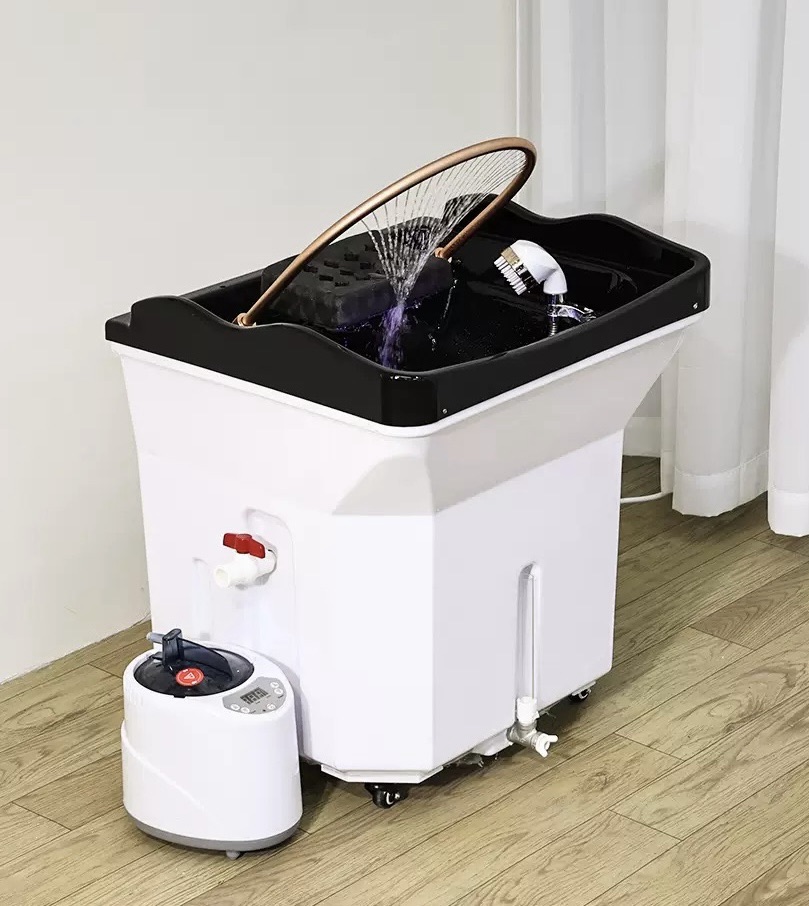
Can the Same Portable Shampoo Bowl Be Used for Both Hair and Foot Services? What Salon Chains Should Consider
A discussion among salon professionals recently raised a controversial but practical question:
Can the same portable shampoo bowl be used for both hair washing and foot washing?
Some salon owners strongly oppose the idea. They believe that using the same basin for a client’s hair after it has been used for another client’s feet creates an unacceptable hygiene concern.
Others believe the practice can be acceptable if the basin is fitted with a disposable liner and thoroughly cleaned and disinfected after every service.
For an independent salon with limited space and a low volume of foot-care services, using one portable basin for different services may appear efficient.
For a salon chain, however, the issue is more complicated.
The decision may affect:
- Cleaning and disinfection procedures.
- Employee training.
- Customer confidence.
- Brand positioning.
- Compliance requirements.
- Equipment maintenance.
- Consistency across multiple locations.
The important question is not simply whether the basin is physically capable of holding water for both services.
The more useful question is:
Can the same basin be used for hair and foot services in a way that is hygienic, acceptable to customers and consistently manageable across multiple salon locations?
1. Why Some Salons Consider Using One Portable Basin for Multiple Services
Portable shampoo bowls are attractive because they provide more flexibility than fixed shampoo stations.
Depending on the model, a portable shampoo basin may include:
- A water tank.
- A drainage tank.
- A flexible sprayer.
- A water pump.
- A heating system.
- Wheels for mobility.
- A removable drain hose.
Salon operators may consider using the same basin for both hair and foot services for several reasons:
- Limited floor space.
- No fixed plumbing in the treatment area.
- Low demand for foot-washing services.
- A desire to test a new service before purchasing more equipment.
- Lower initial equipment expenditure.
- The need to move equipment between treatment rooms.
- A desire to improve equipment utilization.
From a cost and space perspective, the idea can appear reasonable.
However, equipment efficiency should not be evaluated only by the number of services one product can technically support.
Salon chains must also determine whether the operating process remains safe, simple and repeatable.
2. The Issue Is Not Whether the Basin Can Hold Feet
A portable shampoo bowl can physically hold water. In many cases, it may also be large enough to accommodate a client’s feet.
This means that foot washing may be technically possible.
However, salon equipment should not be evaluated only by physical capability.
A basin used for hair services may come into contact with:
- Hair.
- Scalp oils.
- Shampoo and conditioner.
- Hair masks.
- Scalp-treatment products.
- Hair-colour residue.
The same basin used for foot services may come into contact with:
- Skin residue.
- Lotions and oils.
- Foot-care products.
- Dirt carried on the feet.
- Water from soaking or washing.
The question is therefore not simply:
“Can feet fit inside the bowl?”
It is:
“Can every part of the equipment be cleaned and disinfected effectively before the basin returns to hair service?”
3. Does a Disposable Liner Make the Practice Acceptable?
Supporters of multi-use basins often suggest placing a disposable liner inside the bowl before a foot service.
A properly fitted liner can reduce direct contact between the client’s feet and the basin surface.
It may also:
- Reduce visible residue.
- Make post-service cleaning easier.
- Protect part of the basin surface.
- Reduce the amount of cleaning product required.
However, a disposable liner does not isolate every part of the equipment.
Areas that may remain exposed include:
- The basin rim.
- The sprayer head.
- The flexible hose.
- The faucet or water outlet.
- The drain opening.
- The control handles.
- The exterior basin surface.
- The surrounding trolley or cabinet.
- The floor around the equipment.
Water may splash outside the liner during use.
The liner may also:
- Move during the service.
- Tear.
- Fail to cover the entire contact area.
- Allow water to collect between the liner and the basin.
Therefore, using a liner should not replace a complete cleaning and disinfection process.
Salon operators still need to ask:
- Was the liner installed correctly?
- Did it remain secure throughout the service?
- Was it removed without contaminating nearby surfaces?
- Was the basin cleaned after the liner was removed?
- Were the sprayer, hose, drain and controls also cleaned?
- Was the wastewater handled appropriately?
4. The Drainage System May Be More Important Than the Visible Basin
The visible bowl is only one part of a portable shampoo system.
Depending on the model, wastewater may pass through:
- A drain opening.
- A flexible drain hose.
- A water pump.
- A removable wastewater tank.
- Internal connectors or valves.
If the same system is used for both hair and foot services, salon chains should consider whether these components can be cleaned and maintained effectively.
Questions to ask include:
- Can the drain hose be removed?
- Can the wastewater tank be fully emptied?
- Are there internal areas where water may remain?
- Can the drain components be disinfected?
- Can replacement hoses and tanks be purchased separately?
- Does the manufacturer provide cleaning instructions?
A basin may look clean while residue, odour or standing water remains inside the drainage system.
For this reason, cleaning only the visible surface may not be sufficient for a multi-use operation.
5. Hygiene Depends on the Entire Process
No disposable liner, basin material or disinfectant can guarantee hygiene by itself.
Hygiene depends on the complete process followed before, during and after each service.
A salon chain considering multi-use portable basins should define:
- Which services are permitted.
- Which services are prohibited.
- When disposable liners must be used.
- How liners should be installed and removed.
- Which cleaning products are approved.
- Which surfaces and components must be cleaned.
- How long disinfectant must remain in contact with surfaces.
- How wastewater tanks should be emptied and cleaned.
- How drain hoses should be maintained.
- Who is responsible for completing and recording the process.
The process must also be practical during a busy salon day.
A cleaning procedure that takes too long, requires complicated disassembly or depends on employees remembering many informal steps may not be followed consistently.
For a chain salon, the best procedure is not only technically thorough. It should also be simple enough to train, supervise and audit.
6. Material Compatibility Should Be Confirmed
Portable shampoo bowls may be made from plastic, ceramic, composite materials or other surfaces.
Repeated exposure to water, oils, hair products and cleaning chemicals may affect:
- The basin surface.
- Seals.
- Plastic fittings.
- Flexible hoses.
- Drain components.
- Metal finishes.
A cleaning product suitable for one material may damage another.
Before using a portable shampoo bowl for multiple services, buyers should ask the supplier:
- What material is the basin made from?
- Which cleaning products are compatible with the surface?
- Can strong disinfectants cause discolouration or cracking?
- Can the hose and drain components tolerate repeated cleaning?
- Are seals and fittings replaceable?
- Can written cleaning guidance be provided?
A supplier should be able to explain not only how the product works but also how it should be maintained during commercial use.
7. Customer Perception May Be the Largest Commercial Risk
Even if a salon follows an effective cleaning procedure, customers may still feel uncomfortable when they learn that the same basin is used for both hair and foot services.
A customer may think:
“Another client had their feet washed in this basin, and now my hair is being washed in it.”
The customer may not know:
- That a disposable liner was used.
- Which disinfectant was applied.
- How the drainage system was cleaned.
- Whether the employee followed every required step.
They may judge the situation based only on what they see or hear.
For salon chains, customer perception can affect:
- Trust.
- Online reviews.
- Customer retention.
- Staff conversations with clients.
- Brand reputation.
A practice that is technically manageable may still be commercially inappropriate if it conflicts with the salon’s positioning.
This is particularly relevant for brands positioned as:
- Premium.
- Luxury.
- Wellness-focused.
- Medical-aesthetic.
- Family-oriented.
- Highly hygiene-conscious.
Salon chains should evaluate the issue from the perspective of the most concerned customer, not only customers who have no objection.
8. Transparency Can Create Additional Challenges
A salon may decide that the basin is hygienically safe after cleaning.
However, management should also consider how the practice will be communicated to customers.
If the salon does not explain that the basin is used for multiple services, some customers may feel misled when they discover it.
If the salon does explain the practice, customers may ask:
- How is the basin cleaned?
- Are the hoses and drain disinfected?
- Is a new liner used for every client?
- Is the same water tank used?
- Does local regulation permit this?
Employees must be prepared to answer these questions consistently.
For salon chains, different explanations from different employees or branches can create confusion and undermine confidence.
9. Local Rules and Insurance Requirements May Differ
Salon sanitation, licensing and equipment requirements vary between countries, states, provinces and municipalities.
A practice accepted in one location may be restricted or interpreted differently in another.
Before using the same basin for hair and foot services, salon operators should review the requirements that apply in each operating market.
Relevant areas may include:
- Salon licensing regulations.
- Cosmetology rules.
- Health and sanitation requirements.
- Foot-care service regulations.
- Cleaning and disinfection standards.
- Wastewater handling.
- Insurance conditions.
- Record-keeping requirements.
Salon chains operating in multiple regions should not assume that a policy approved for one branch can automatically be used everywhere.
Equipment suppliers and sourcing partners can provide product and maintenance information, but local compliance should be confirmed with the relevant authorities and professional advisers.
10. One-Location Judgment Does Not Automatically Scale
An owner-operated salon may be able to supervise every cleaning step personally.
The owner may know:
- Exactly how the basin was used.
- Whether a liner was installed correctly.
- How the hose and drain were cleaned.
- Whether the equipment is ready for the next client.
A salon chain cannot rely on the same level of personal supervision.
As the number of locations increases, management must consider:
- Whether every employee will follow the same procedure.
- Whether managers can inspect the process.
- Whether cleaning records are required.
- Whether training can be completed consistently.
- Whether staff turnover will affect execution.
- Whether equipment condition will vary between branches.
A procedure that depends heavily on employee judgment may create inconsistent results across locations.
For salon chains, simplicity and clear separation of services often reduce operational risk.
11. When Using the Same Basin May Be More Practical
Using the same portable shampoo bowl for both hair and foot services may be more practical when:
- The additional service is offered only occasionally.
- The equipment manufacturer confirms the intended use.
- The basin and drainage components are easy to remove and clean.
- Disposable liners fit securely.
- The salon has a detailed written cleaning procedure.
- Employees receive proper training.
- Local rules permit the practice.
- The salon clearly communicates its hygiene process.
- The brand positioning is compatible with multi-use equipment.
It may also be considered during a limited pilot programme before the salon invests in dedicated equipment.
Even in these situations, management should monitor:
- Customer feedback.
- Cleaning time.
- Employee compliance.
- Odour or drainage issues.
- Equipment wear.
- Maintenance requirements.
12. When Separate Equipment Is Usually the Better Choice
Using separate equipment is often more practical when:
- Foot services are offered frequently.
- The salon has a high daily client volume.
- The brand has a premium or luxury position.
- The salon operates multiple locations.
- Employees regularly move between branches.
- Cleaning procedures need to be simple and easy to audit.
- Customers can clearly observe the equipment being used.
- The local market has strict sanitation requirements.
- The business expects to expand foot-care services.
Separate equipment creates a clearer operating rule:
- Hair-service equipment is used for hair services.
- Foot-service equipment is used for foot services.
This reduces the number of decisions employees must make and can make customer communication easier.
Although separate equipment requires additional investment and space, it may reduce long-term operating complexity.
13. Evaluate Total Operating Cost, Not Only Equipment Cost
Using one portable basin for two services may reduce the initial equipment budget.
However, salon chains should evaluate the total operating cost.
Relevant costs may include:
- Disposable liners.
- Cleaning and disinfection products.
- Employee cleaning time.
- Staff training.
- Drainage-system maintenance.
- Replacement hoses and tanks.
- Equipment downtime.
- Management supervision.
- Customer complaints.
- Brand-reputation risk.
A single multi-use basin may cost less to purchase but require more complicated operating procedures.
Separate equipment may cost more initially but offer:
- Clearer service separation.
- Faster staff training.
- More predictable cleaning procedures.
- Easier customer communication.
- Better scalability.
The lowest equipment cost is not always the lowest total operating cost.
14. Questions Buyers Should Ask Portable Shampoo Bowl Suppliers
Intended Applications
- Was the basin designed only for shampoo services?
- Does the manufacturer support other applications?
- Are there restrictions on multi-service use?
Basin and Surface Materials
- What material is the basin made from?
- Which cleaning and disinfection products are compatible with it?
- Can repeated cleaning affect the finish?
- Can the basin surface resist staining and odours?
Water and Drainage System
- Does the unit use clean-water and wastewater tanks?
- Can the tanks be removed and cleaned?
- Can the drain hose be removed?
- Are replacement tanks, hoses and valves available?
- Are there internal areas where water may remain?
Disposable Liners
- Can disposable liners be used safely?
- What liner size is required?
- Will the liner interfere with drainage?
- Which parts of the equipment remain exposed?
Cleaning and Maintenance
- Can written cleaning instructions be provided?
- Which components require routine maintenance?
- How frequently should hoses and tanks be replaced?
- Can spare parts be ordered separately?
Salon Chain Procurement
- Can the same model be supplied for future branches?
- Can specifications remain consistent across production batches?
- Can spare parts be stocked centrally?
- Can cleaning labels or instructions be customized?
- Can phased deliveries be arranged?
15. A Practical Decision Framework for Salon Chains
Before allowing the same portable shampoo bowl to be used for hair and foot services, salon chains should review six questions.
1. Equipment Suitability
Does the manufacturer confirm that the equipment can safely support both uses?
2. Complete Cleanability
Can the basin, sprayer, hose, drain, tanks and surrounding surfaces all be cleaned effectively?
3. Compliance
Is the intended use permitted under local sanitation, licensing and insurance requirements?
4. Customer Acceptance
Will customers feel comfortable knowing that the same basin is used for hair and foot services?
5. Operational Consistency
Can every employee and branch follow the same procedure without relying on personal judgment?
6. Commercial Value
Does the saving in equipment and space justify the additional cleaning, training and brand-management requirements?
If any of these questions cannot be answered clearly, separate equipment may be the more manageable choice.
Conclusion: Can the Same Portable Shampoo Bowl Be Used for Hair and Foot Services?
The same portable shampoo bowl may be physically capable of supporting both hair and foot services.
Disposable liners, proper cleaning and careful maintenance may reduce some hygiene concerns.
However, physical capability alone is not enough.
Salon chains should also consider:
- The complete drainage system.
- Cleaning and disinfection procedures.
- Material compatibility.
- Local requirements.
- Employee execution.
- Customer perception.
- Brand positioning.
- Scalability across multiple locations.
For an occasional service in a small, closely managed environment, multi-use operation may be practical under the right conditions.
For frequent foot services, premium brands or large multi-location operations, separate equipment will often provide clearer procedures and lower operational risk.
The right decision is not simply about whether one basin can perform two functions.
It is about whether the complete operating process can protect hygiene, customer confidence and brand consistency.
Evaluate Portable Salon Equipment with Lohas Supply
Lohas Supply supports salon chains, importers, distributors and salon furniture brands with equipment sourcing and supplier management in China.
Our services include supplier evaluation, specification review, product comparison, factory coordination, customization support, production follow-up and quality inspection.
If you are evaluating portable shampoo systems, mobile salon equipment or multi-service equipment for a salon chain, send us your intended use, target specifications, quantities and operating market.
We can help you compare suitable suppliers and assess whether the equipment configuration supports your operational requirements.